Global Slowdown: Is Anyone Telling the Truth?
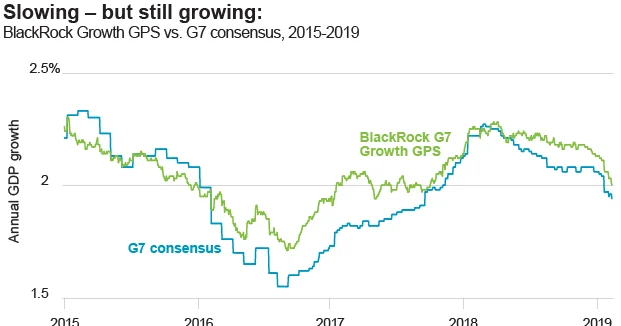
The global economic picture is, to put it mildly, confusing. We're seeing headlines about slowing growth, yet individual companies are reporting record revenues. How do we reconcile this? Are the macro trends simply lagging behind the micro, or is something more insidious at play? The U.N. Trade and Development Report paints a bleak picture: output growth is slowing, uncertainty is high, and any early momentum from 2025 has likely evaporated. But let’s unpack that a little.
The Divergence Problem
The U.N. report highlights a widening gap between global trade and global finance. This isn't just a minor discrepancy; it's a potential fault line. It suggests that the flow of money isn't necessarily tied to the real movement of goods and services. Think of it like this: imagine a river (global finance) flowing alongside a canal (global trade). If the river starts to swell while the canal shrinks, something is diverting the water. What's causing this divergence? Are we seeing increased financial speculation divorced from actual economic activity? Is capital being parked in unproductive assets, inflating bubbles while the real economy stagnates? These are the questions we should be asking.
Contradictory Company Data: CorVel Corporation
We also see seemingly contradictory data at the company level. Take CorVel Corporation, for example. Their stock has taken a beating, losing nearly 40% of its value in the past year, hitting a fresh 52-week low of $70.29. Yet, their fundamentals appear solid. In November, they reported a 7% year-over-year revenue increase (reaching $240 million) and a 20% jump in earnings per share (EPS) to $0.54. They were even recognized as a growth leader by TIME. So, what gives? Is the market simply irrational, or is there something the company isn't telling us? The technical analysis points to further decline, forecasting a potential 13% drop in the next quarter. This suggests that market sentiment, not necessarily company performance, is driving the stock price. Which is a dangerous game. CorVel Shares Continue Descent Amidst Strong Fundamentals
The "Global South" Mirage
The U.N. report also points to the rising weight of the "Global South" in trade and output growth as a positive sign. While it's true that countries are diversifying their export markets and production, reducing their exposure to policy-driven trade disruptions, it's crucial to examine the underlying data. Are these countries genuinely experiencing sustainable growth, or are they simply benefiting from a shift in global supply chains? Are they building resilient economies, or are they becoming overly reliant on specific export sectors?
I've looked at hundreds of these reports, and this emphasis on the "Global South" always strikes me as a convenient narrative. It allows institutions to highlight progress while glossing over the very real challenges these countries face – infrastructure deficits, political instability, and vulnerability to commodity price shocks, to name a few. It’s like saying your garden is thriving because one tomato plant is producing fruit, while ignoring the weeds strangling the rest of the vegetables.
Questionable Profitability: Lineage Logistics
And then we have Lineage Logistics, expanding its cold storage facilities across North America and acquiring new facilities in Canada. They even achieved I-House status in Louisiana, allowing for on-site USDA inspections of imported food. On the surface, this suggests a healthy and growing food supply chain. But look closer. Lineage reported a $6 million loss in the three months ending June 30th, compared to a $68 million loss the year before. Revenue only increased slightly, from $1.34 billion to $1.35 billion. So, while they are expanding their infrastructure, their profitability remains questionable. Are they overextending themselves? Are they betting on future growth that may not materialize? Lineage Continues North American Warehouse Expansion
Reality Check Required
The global economic narrative is full of these contradictions. We see positive headlines masking underlying weaknesses, and negative market reactions defying strong fundamentals. The key is to dig deeper, question the assumptions, and analyze the data with a healthy dose of skepticism. Don't be swayed by the hype. Look at the numbers, and ask yourself: what's the real story? Is anyone telling the truth?
The Truth Is in the Footnotes
The real story rarely fits neatly into a press release. You have to read between the lines, scrutinize the data, and, most importantly, acknowledge what you don't know.